Look up what matters
Explore ways to bring eFind answers closer to the question, with context people choose to share.
A wearable AI concept from eFind
A new way to bring helpful information into view—and keep your attention on the world around you.
Concept statusThis eGlass design study explores wraparound sunglasses with a camera and visible activity indicator. Display, AI integrations, final specifications, pricing and availability are not confirmed.
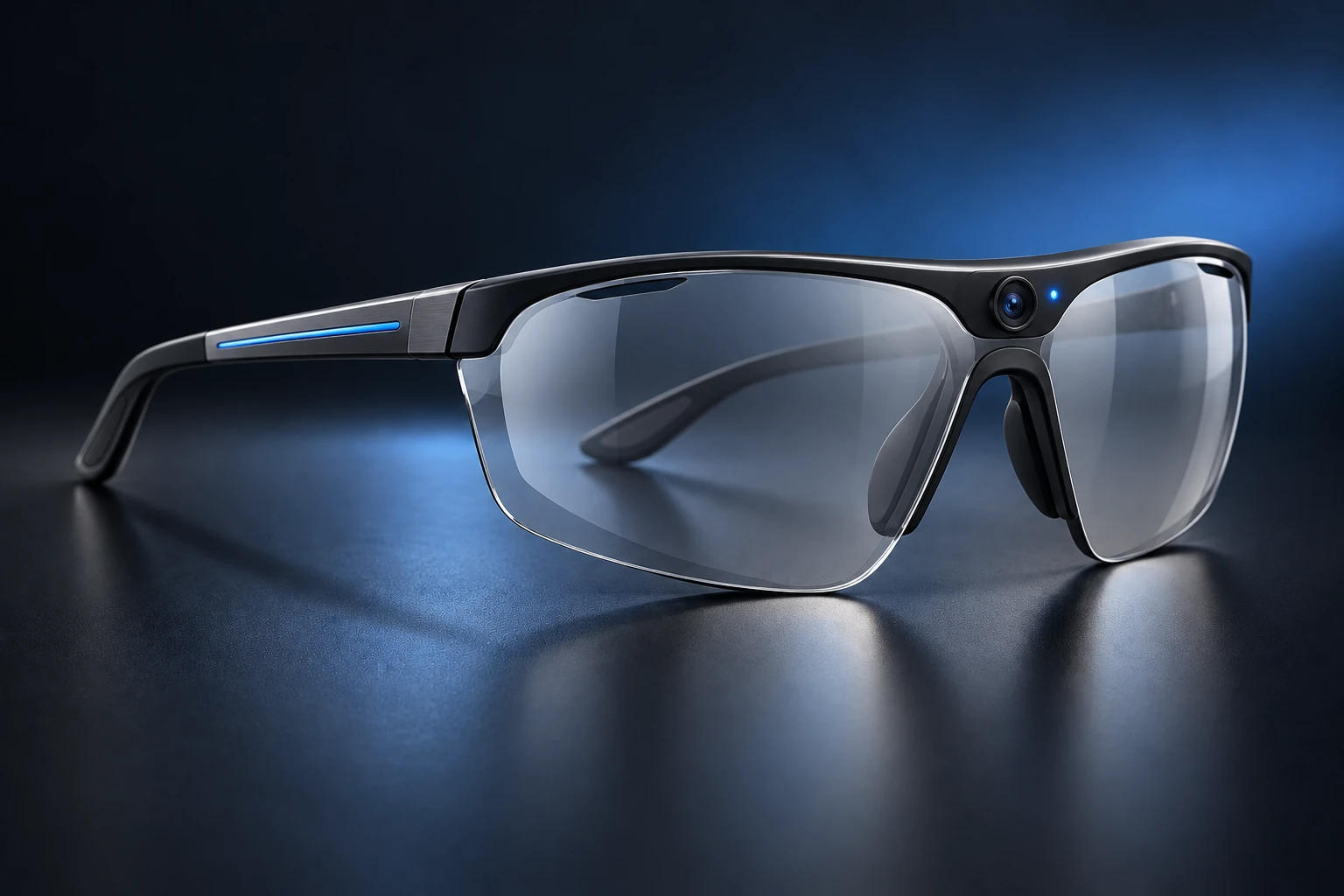
eGlass sport frame study · Camera and indicator are concept details; final design may differ.
The eGlass vision
We imagine wearable technology that helps you look something up, find your way or understand what’s around you—then lets you get back to the moment.
Explore ways to bring eFind answers closer to the question, with context people choose to share.
Glanceable guidance and timely cues are a design direction, with attention kept on the people and place around you.
Clear choices for connected features and personal context belong at the center of the experience.
These are product directions under exploration, not confirmed product capabilities.
eGlass form studies
Sport, everyday and outdoor silhouettes explore how a camera and eLine detail could fit into frames people already want to wear.
Form study 01
A lightweight-looking shield silhouette with a centered camera and lighter smoke lens.
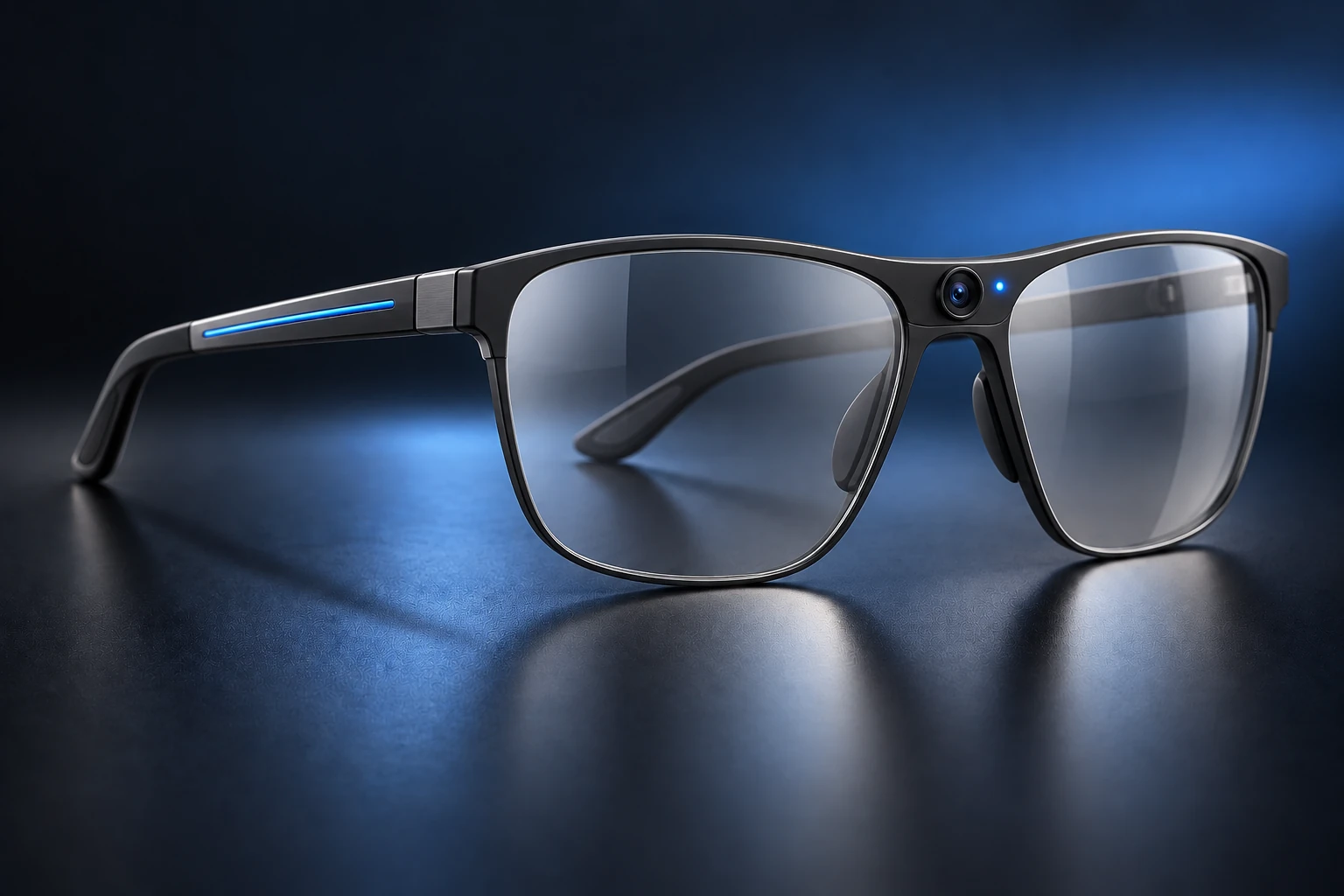
Form study 02
A familiar everyday shape with a camera and eLine detail integrated into the frame.
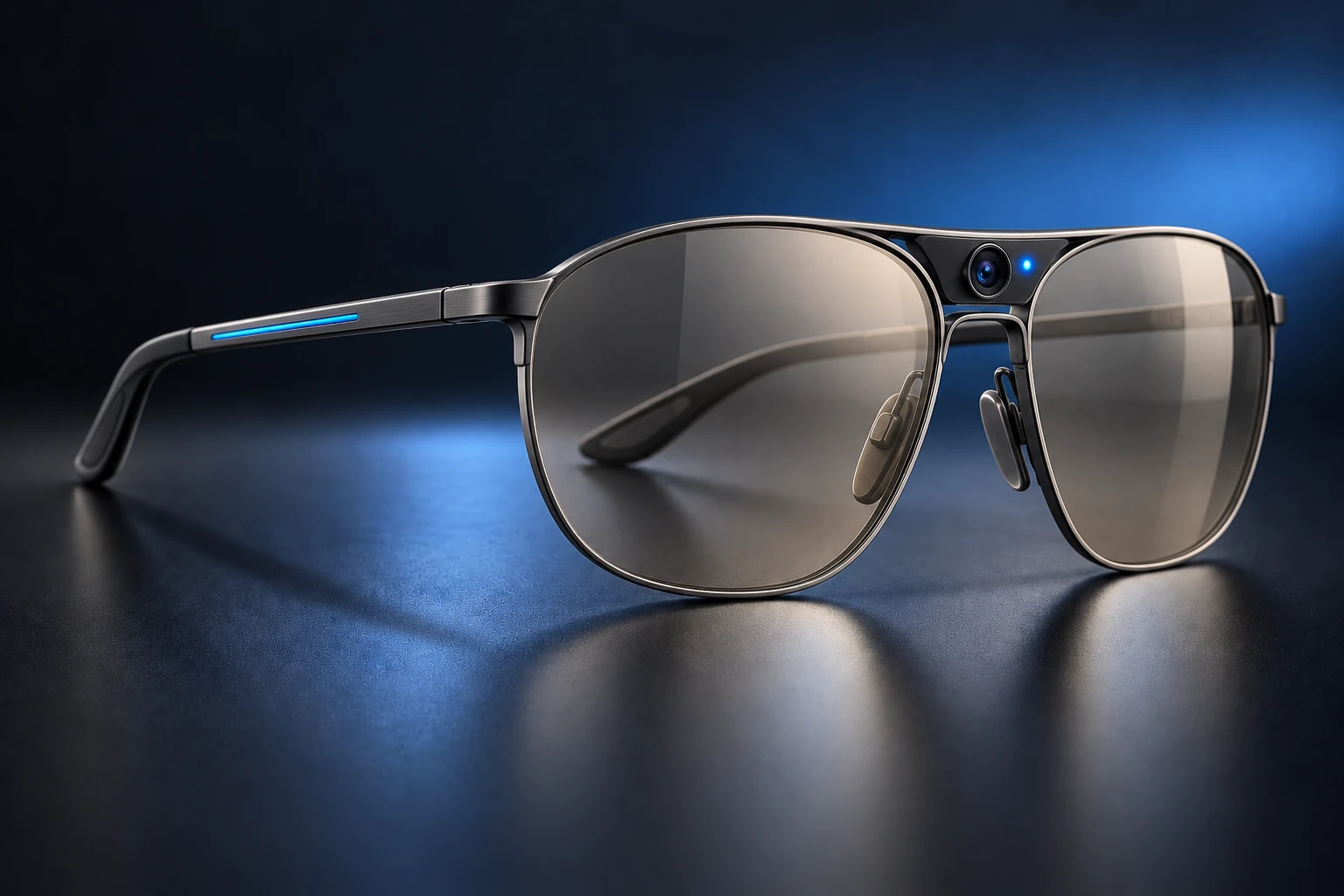
Form study 03
A lighter metal-frame direction with warm, gently tinted lenses and a visible camera cue.
These are visual design studies. Frame construction, camera placement, lens options, specifications and availability are not finalized.
An idea for everyday discovery
The goal is a wearable companion that can help with the small questions that come up as you move through your day.
eFind AirWear · Audio Mist research
Audio Mist explores whether short prompts could be directed through the air without an earbud. One established research approach uses modulated ultrasound to create audible sound along a focused path.
That acoustic principle does not prove it can be made small, comfortable, safe or effective in glasses. eFind has not announced a working glasses-sized Audio Mist prototype.
Research direction · Not a confirmed eGlass featureHere is the principle behind a parametric-array approach, explained simply.
A voice prompt is used to modulate an ultrasonic signal—sound at a frequency above normal human hearing.
An array of ultrasonic emitters can shape the modulated signal into a more directional beam through the air.
As the beam travels, nonlinear interactions in air can recreate audible sound along its path. The listener hears audible sound; the ear does not decode ultrasound.
Other people may hear some sound, and nearby surfaces may reflect it. What reaches others can depend on distance, alignment, movement and the environment. We cannot promise that only the wearer would hear it.
A wearable version would need emitters that fit in a frame while balancing speech clarity, power, comfort, heat, head movement and appropriate acoustic output. Those questions still need testing.
No. Audio Mist is a research direction. A glasses-sized prototype, final hardware and product availability have not been announced.
That is unknown. Sound quality, practical listening distance, power use and comfort have not been demonstrated in an eGlass design. Brief cues are possible examples, not confirmed features.
Designed around your choice
Wearable AI needs to make its boundaries easy to understand. Privacy is a design principle for eGlass, with specific controls and data practices to be defined before any product launch.
Camera, microphone, location and personal-context access should be understandable and controlled by the wearer.
This frame study pairs its camera with a visible activity indicator. The final indicator behavior and privacy controls remain to be defined.
Connections to eFind services should respect the information people choose to use and the controls they set.
These are design commitments in progress. Device permissions, storage, processing, retention and sharing practices will be documented only after they are established.
Part of something connected
The eGlass concept is part of a broader eFind ecosystem—services and devices designed to work together around the person using them.
Search and discovery to help people find and understand information.
The AI layer envisioned across eFind experiences.
One account and sign-in layer across eFind services.
A personal cloud for files, photos and memories.
An AI-native device concept built around the same North Star experience.
An idea in progress
We are exploring how eGlass could help people look up, look around and stay present. Follow the thinking behind the concept as it develops.